BROACHING HEADS

The Brocciatore is a tool for quickly cutting polygonal grooves with a regular cross-section

(square, hexagonal, TORX®, serrated, slotted, etc.) in blind or through holes.

In addition, with the help of the adapter, external profiles with a regular cross-section can be created using the same broaching machine.

The Brocciatore can be mounted on most machine tools with rotary motion, including both traditional machines (lathes, drills, milling machines) and CNC machines, and can therefore operate both vertically and horizontally.

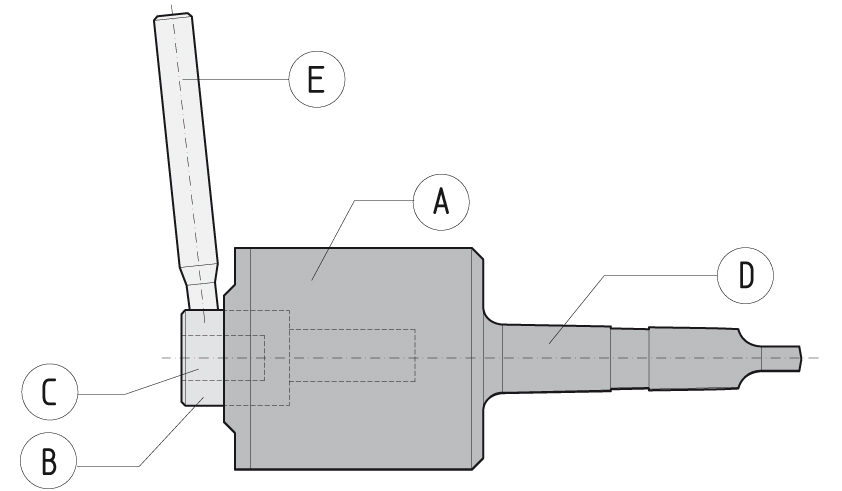
It is made of heat-treated and ground steel, and contains ball bearings designed to withstand the loads resulting from machining.

It is mounted inside the housing and rotates on ball bearings located within the housing itself. On the outer part that protrudes from the housing, there is a screw for locking the broach in place and a threaded hole for securing the drive bar.

It consists of a recess inside the broach-holding spindle into which the broach is inserted. This recess is carefully machined and ground to a tolerance that ensures maximum machining precision.

Opposite the spindle is the shank for mounting on the machine tool, which is integral with the body. The broach is manufactured
with different types of shanks so that it can be mounted on a wide range of machine tools:
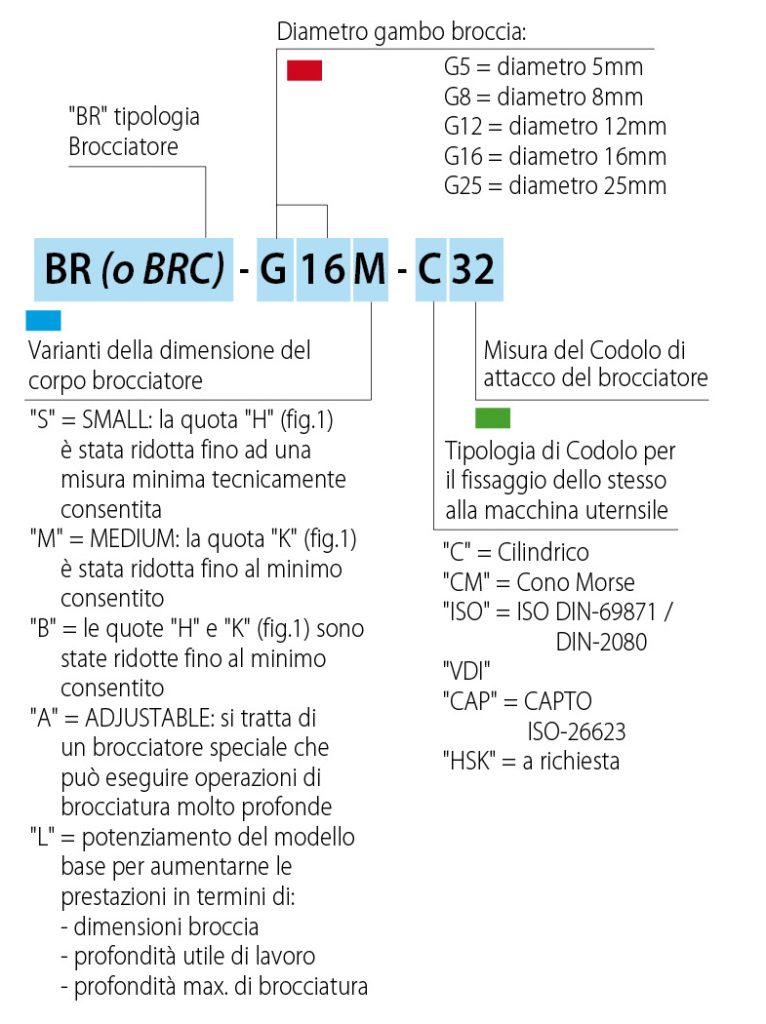
> Cylindrical shank C
> codolo cono Morse CM
> codolo ISO – DIN 69871 / DIN 2080
> codolo VDI
> codolo HSK

E’ costituita da una barretta d’acciaio, fornita in dotazione, che viene avvitata in un apposito foro presente sul mandrino porta broccia.Per determinate operazioni di brocciatura si consiglia l’uso della barretta di trascinamento; in questo modo si assicura la perfetta linearità della figura durante l’operazione di brocciatura.
Inoltre l’impiego della barretta è indispensabile quando il pezzo da lavorare richiede un preciso orientamento della figura da ottenere con la brocciatura.
Nel caso di una lavorazione al tornio la barretta deve essere inserita in una forcella presente sul mandrino del tornio stesso; nel caso di una lavorazione con fresa o trapano, la barretta viene bloccata da un’asta applicata sul piano di lavoro.

Announcements

Scroll to Top